Quick Answer
How to avoid getting overcharged in India? checks the MRP (Maximum Retail Price) printed on all packaged goods—it is illegal to sell above this price. For unpriced items (souvenirs, autos), always haggle or use apps like Uber to benchmark transport costs. Never accept the first price offered in a tourist market; counter with 30-40% of the asking price.
One of the biggest fears for any traveler in a new country is the "foreign tax"—paying double or triple what a local pays. In India, this can happen with auto-rickshaws, souvenir shops, and even some unregulated tour guides.
But here is the good news: India actually has some of the strongest consumer protection laws for retail products in the world. You just need to know where to look.
1. The Magic of "MRP" (Maximum Retail Price)
This is your best friend in India. By law, every packaged commodity—from a bottle of water to a bag of chips or toothpaste—must have an MRP printed on the packaging.
- Bottled Water: Usually ₹20 for 1 Liter.
- Soft Drinks: ₹20-40 depending on size.
- Packaged Snacks: Printed explicitly on the packet.
2. The Auto-Rickshaw & Taxi Rule
Transport is where the "tourist price" is most common. A ride that costs ₹100 for a local might be quoted as ₹500 to you.
How to beat this:
- Use Apps for Benchmarking: Even if you want to take a local auto, check the price on Uber or Ola first. That is the fair market price.
- "Meter Down": In cities like Mumbai, autos strictly follow the meter. Insist on "Meter se chalo" (Go by the meter).
- Walk Away: If a driver refuses a fair price, simply saying "No thanks" and walking away often makes them drop the price immediately.
3. Souvenir Shopping: The Art of Bargaining
MRP does not apply to handicrafts, clothes in street markets (like Sarojini Nagar in Delhi or Colaba Causeway in Mumbai), or souvenirs. Here, bargaining is expected.
Benchmark Prices (2026 Estimates)
- Pashmina Scarf (Synthetic): ₹300 - ₹500 (Real ones cost ₹5000+)
- Small Wooden Elephant: ₹100 - ₹200
- Cotton Kurta/Shirt: ₹400 - ₹800
- Fridge Magnet: ₹50 - ₹100
4. Dual Pricing at Monuments
Note that "Tourist Pricing" is officially legal at government monuments. The Taj Mahal, Red Fort, and museums often have a higher ticket price for foreigners (e.g., ₹600 vs ₹50). This is official policy, not a scam. It helps maintain the heritage sites.
5. The Expatly Solution
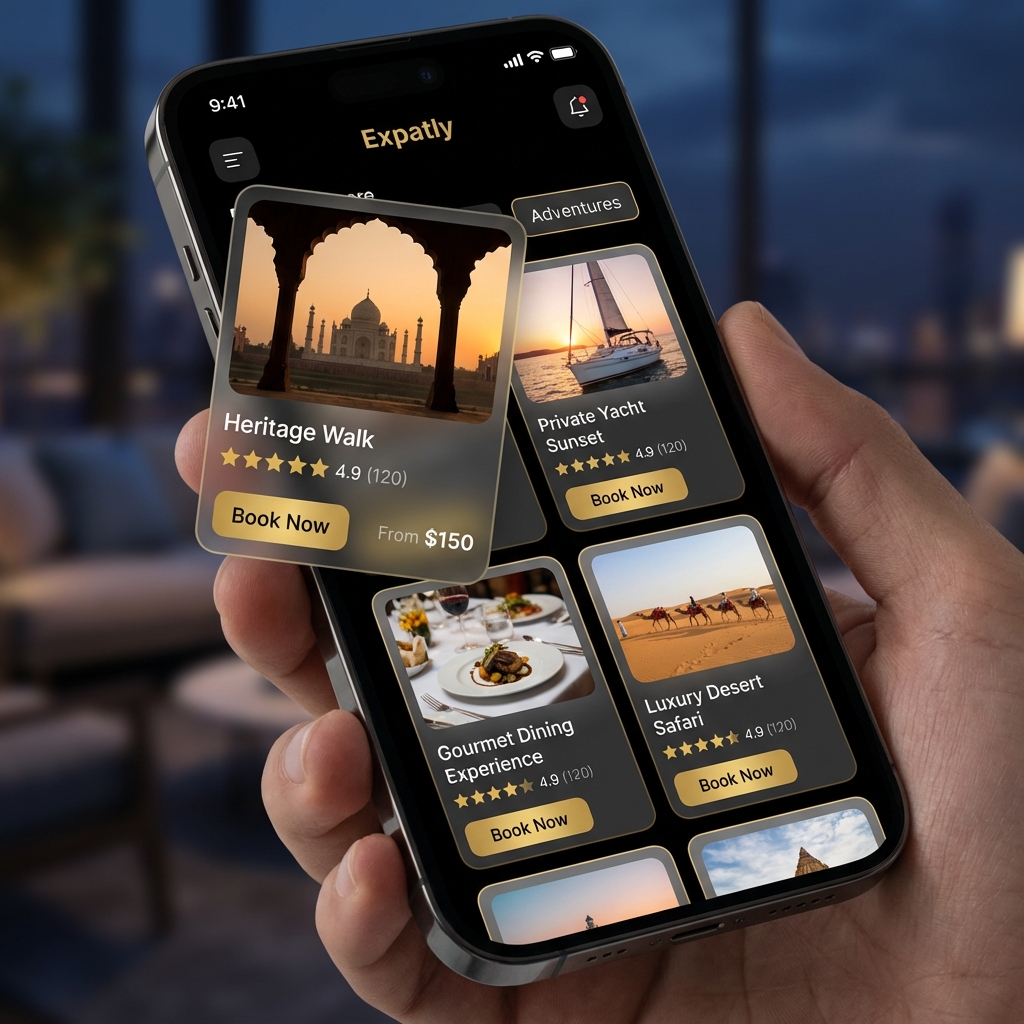
We built Expatly to remove this friction. When you book a cab or experience through our app, you pay the fixed, transparent price—no haggling, no stress.